Older adults hold a life time of tales, and a lot of them depend upon family or specialist caregivers for the next phases. When a crisis strikes, the minutes prior to an ambulance shows up are frequently the difference between a frightening scare and a permanent loss. That is why targeted first aid training and a functional CPR course are not just nice-to-have certifications first aid certificate course on a wall. They are abilities that help individuals rest much better in the evening, due to the fact that they understand what to do when it counts.
I have taught first aid and CPR to retired people in their seventies, night-shift care workers in their twenties, and grown-up day care for parents with intricate problems. The most effective courses fulfill individuals where they are. Elders have various dangers and physical capabilities than teens on a sports field. Caregivers handle medication schedules, assistive tools, and home designs that were never created for emergency situation convenience. A reliable first aid course addresses those realities, builds muscle mass memory, and trims away anything that squanders time.
What modifications with age transforms the response
Most emergency situation treatment principles stay consistent throughout ages, yet the body of an older adult behaves in different ways under tension. Flow can be slower, bones much more breakable, lungs less flexible, and medications much more intricate. The same loss that leaves a teenager with a contusion can put an elderly in the medical facility with a hip fracture and interior blood loss risk. Dehydration, also moderate, increases the chance of lightheadedness and complication. Orthostatic hypotension transforms a typical standing movement into a passing out hazard.
Cardiac arrest in elders frequently complies with hidden heart disease, heart rhythm problems, or issues from stroke. CPR training for this group ought to highlight early recognition of agonal breathing and unresponsiveness. Individuals commonly think twice since the breathing looks "not fairly typical." Depend on the formula. If someone is unresponsive and not breathing normally, start chest compressions and send for an AED.
Choking looks different too. Partial airway obstruction may be quiet, simply weak coughing and a worried appearance. Dentures can make complex the seal for rescue breaths. Stomach thrusts continue to be efficient for mindful adults, yet rib delicacy means good guideline on method and force issues. The goal is to remove, not to injure. I have actually seen little caregivers relocate bigger individuals efficiently by utilizing position and leverage as opposed to raw strength.
The right first aid and CPR course for elders and caregivers
Not all first aid courses are made with aging in mind. When you search for first aid and cpr courses, favor programs that include senior citizen situations, movement constraints, and home-based emergencies. A weekend wild course is superb for walkers, but it may not cover medicine interactions or oxygen equipment.
A strong first aid and cpr course for this target market tends to consist of the following:
- Hands-on CPR training with high-feedback manikins, plus AED practice and acknowledgment of agonal respirations. Choking action for seated and wheelchair-bound people, consisting of adaptations when you can not get behind the person easily. Fall assessment, head injury red flags, and risk-free movement methods to prevent additional harm. Medication emergency situations, from insulin incidents to anticoagulant bleeding, consisting of how to interact important details to paramedics. Environmental threats at home, such as burns from warm water, carbon monoxide gas direct exposure, and warmth stress and anxiety during power outages.
Those are not simply topics on a slide. In a helpful first aid training session, you will practice them in actual placements: at a dining chair, next to a pedestrian, on a bathroom flooring. You will find out to analyze without tugging someone upright. I such as to run drills where the "living room" has a coffee table to navigate and a rug to trip over, since that is where most occurrences really happen.
If you work in an organization that needs evidence, seek an accredited first aid certificate tied to an acknowledged body. Several providers bundle a cpr course right into the exact same session, releasing different CPR certifications if needed. For any person that earned certification a while earlier, a cpr refresher course brings you back to existing procedures and rejuvenates muscular tissue memory. Abilities decay is predictable. Six to twelve months after training, efficiency goes down greatly without practice, which is why periodic cpr courses matter.
CPR, AEDs, and the truths of older bodies
High-quality breast compressions still drive the scientific research. Press set in the center of the upper body, enable full recoil, lessen interruptions, and use an AED as quickly as it gets here. With elders, you will certainly sometimes hear or really feel ribs offer. That is dreadful in the minute yet not a factor to stop. The priority is blood circulation to first aid training Rockhampton region the mind and heart.
Depth and rate support as instructed in a common cpr course uses, yet body habitus and upper body rigidity can make it tougher to hit targets. I coach caretakers to position themselves so they can utilize the weight of their upper body as opposed to arm strength alone. Kneel near the breast, secure the elbow joints, and allow gravity do its share. For frail rescuers, a second person ready to switch every two mins makes a quantifiable difference.
AED usage around implanted gadgets and pacemakers asks for specific pad positioning. If you see a swelling under the skin below the collarbone, position the pad at least a few centimeters away, not directly over the device, and follow voice triggers. Oxygen usage in your home prevails. If oxygen is flowing, transform it away from the upper body area before providing shocks and make certain no energetic flames close by. Good first aid and cpr courses cover these quirks in functional terms.
Choking dangers, swallowing problems, and what to do
Choking rankings high in home emergencies for senior citizens, especially those with dysphagia after stroke or Parkinson's illness. I have actually been phoned call to homes where the occasion began innocently with a completely dry cookie or an improperly positioned tablet. Avoidance is gold: smaller bites, mindful position, and thickened fluids when prescribed. Still, drills matter.

If a mindful person can not cough, talk, or take a breath, and is showing the universal "hands to throat" indicator or looks stressed and quiet, act fast. Alternate abdominal thrusts with back impacts if needed and take into consideration the seated Heimlich variant when the individual can not stand. If the individual ends up being less competent, call for help, start CPR, and inspect the mouth for noticeable obstructions in between collections of compressions. Do refrain from doing blind sweeps. Dentures need to remain in area unless they have come loose and are blocking the respiratory tract. In a mobility device, turn the chair backwards against a wall or protected surface area to make room for inward and higher drives, or transfer to the floor if safe and exercised. This is an action best found out in a first aid course with a teacher that understands assistive equipment.
Falls: preventing the dilemma, after that responding to it
Most caregivers are afraid "the big autumn." The much better course is dull prevention: good lighting, no loose carpets, hand rails that a person will actually grab, and footwear that hold. Place a tough chair with arms in places where a person could require to pause. Hydration and set up toileting prevent those rushed twelve o'clock at night trips that end badly.
When a fall happens, stand up to the urge to carry someone up. Ask what hurts, try to find defect, swelling, or blood loss, and check for head injury indications such as confusion, vomiting, or sleepiness that is out of character. If a person gets on a blood thinner and hits their head, call for medical analysis also if they seem fine at first. Interior blood loss can conceal for hours.
Moving someone with a suspected hip crack can intensify damage. If there is no immediate threat, keep them warm and still, pad bony areas with folded towels, and let emergency situation -responders manage the lift. If you should move them far from a hazard such as a warm oven or a doorway, utilize a draw sheet approach with 2 individuals if possible. A good first aid training session will certainly have you practice this slide rather than a dead lift.
Medical problems that transform first aid decisions
Care for senior citizens is typically take care of comorbidities. Medicines, implanted gadgets, and persistent conditions form what you do next.
- Anticoagulants and antiplatelets: Hemorrhaging danger rises. Even a minor head bump earns respect. For exterior blood loss, use firm direct pressure with clean towel or gauze. Elevation and stress points add little if you are alone, so concentrate on stable pressure. Diabetes: Low blood sugar triggers confusion, sweating, restlessness, and often aggression. If the person is awake and can swallow, 15 grams of rapid sugar such as glucose gel or juice is generally secure, also if you are uncertain. If they are sluggish or can not swallow, do not give oral liquids. Call for aid. Note the moment and any type of insulin doses. COPD and oxygen treatment: Position of convenience matters. Lots of take a breath best while leaning ahead somewhat with supported arms. Do not eliminate prescribed oxygen unless you need to get rid of the area for an AED shock or a flame danger. Discover how to check out the flow meter in your first aid course so you can recover it after the shock. Dementia: Interaction can de-escalate or inflame a crisis. Speak smoothly, one guideline at a time, and jump on the very same eye degree. If an injury enables, allow a familiar individual stay in view. Loud, fast talk can set off frustration and combative behavior.
These are judgment calls formed by technique. Case-based understanding helps. In one course, we ran a circumstance of a guy with atrial fibrillation on warfarin who fell versus a shelf. No evident bleeding, however subtle complication appeared after 5 mins of questions. The students found out to rely on the modification from standard and ask for transport, instead of chalk it as much as fatigue.
Home preparedness: tools that really obtains used
A first aid set for seniors need to match the home's reality, not a brochure image. I such as an inconspicuous wall-mount set near the cooking area and a smaller sized pouch clipped inside a pedestrian bag. Supply what you know how to use.
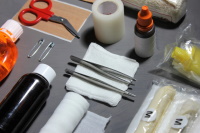
- Non-stick dressings, rolled gauze, and natural bandage for breakable skin splits that lift like tissue paper. A digital thermometer with big screen, and a pulse oximeter if respiratory condition exists, labeled with normal target ranges for that person. Glucose gel packages, oral rehydration salts, and a medication listing that includes does, allergies, and prescriber contact. Nitrile gloves in numerous dimensions, trauma shears, and a small flashlight with fresh batteries. A door essential safe or clear entry strategy so -responders can enter without damaging the frame while you are active with CPR.
Two small notes that repay. Initially, an intense, readable list of emergency situation numbers on the refrigerator, including the bedside nurse line for home wellness or hospice. Second, a folder with breakthrough instructions and a current medication reconciliation. In a crisis, paramedics will certainly thank you, and choices move faster.
What fantastic teachers do differently
The distinction in between a forgettable class and one that transforms behavior is not a slick slide deck. It is a trainer that talks the language of the home, not just the book. In a first aid pro session focused on caregivers, I anticipate to see furnishings moved for circumstance realism, exercise with substitute vomit or spit, and time spent on just how to talk to dispatch without missing information while you work.
Great trainers coach self-confidence. The most effective first aid and cpr courses help elders and caretakers think, with reason, that they can act. That originates from rep and feedback, not from worry tactics. High-feedback manikins, which present compression depth and price, trim the vanity and build capability. Debriefs after each circumstance keep the tone supportive however truthful. I tell individuals that ideal is unusual, and excellent done fast beats terrific done late.
If you deal with stooping or have arthritic hands, state so early. A skilled instructor will certainly use adjustments, such as utilizing a step feces for utilize during compressions or practicing team functions that fit your body. In one course, an individual with an integrated wrist came to be the best AED operator and timer, calling buttons at two-minute marks and maintaining compressions on course with a metronome app.
Certification and refresher course rhythm that fits real life
Certifications expire for a factor. Standards advance and memory slips. A typical pattern is 2 years for a first aid certificate and one year for CPR. If you are a household caregiver without a company mandate, establish your own rhythm. I advise an initial cpr course with AED, a much shorter cpr refresher course about nine to twelve CPR Certificate Osborne Park months later, and a complete first aid and cpr course again at the two-year mark. If you had to use CPR genuine, publication a refresher course within a couple of weeks. The instant debrief aids, but organized practice resets your baseline.
Make sure any online components of first aid courses still include in-person abilities checks. Enjoying a video can not replace the feel of appropriate compression depth or the awkwardness of rolling someone right into the healing placement on a hard flooring. Combined designs work well: theory at home, hands-on in a much shorter session.
Legal defenses and the anxiety of doing harm
Many caretakers are reluctant since they bother with obligation. Good Samaritan legislations in several regions protect lay rescuers that act in great belief within their training degree. The spirit is uncomplicated. If you try to assist without gross carelessness, you are not likely to face legal trouble. CPR provided quickly either assists or does not alter the result. Not doing anything when an individual is less competent and not breathing usually often finishes terribly. A trustworthy first aid course will examine neighborhood legislations and the limits of your role.
Advance directives can make complex the image. If a legitimate Do Not Resuscitate order exists and available, follow it. Maintain copies where they can be found quickly. In the absence of clear paperwork, start life-saving treatment and allow responders to arrange it out on arrival.
Training as a common language in between family members and professionals
The smoothest saves I have actually seen were not ideal. They were worked with. The relative recognized where the AED was, the home wellness aide called send off with crisp solutions, and the next-door neighbor held the door and swung down the rescue. That degree of tranquil sychronisation comes from shared training. If possible, take first aid and cpr together, or a minimum of agree on that gets what throughout an emergency. Practice the initial thirty seconds. That checks responsiveness, that calls, who brings the package, who relocates the pet dog to an additional room.
Care teams in assisted living setups take advantage of the exact same clearness. Cross-train evening team that generally function alone. Place AEDs in predictable, labeled areas with normal checks logged. Data from many centers show that AEDs conserve lives mostly when they are within a ninety-second stroll from common areas and when team feel great utilizing them. Confidence is an item certainly high quality and constant practice.
Making training stick: after-class behaviors that work
Skills discolor unless you push them. Tie micro-practice to regimens you currently have. Throughout a regular television show, invest two minutes doing compression technique on a cushion while a metronome app ticks at the target rate. Once a month, run a thirty-second drill to retrieve the first aid kit and AED without chatting. Time it. Place a sticky note on your fridge with three bullet prompts for emergencies: analyze responsiveness and breathing, call or send out for aid and AED, begin compressions otherwise taking a breath generally. Relocate the note every season so you see it anew.
Reflect on near-misses. The time your parent virtually choked on dry poultry is a present if you use it. Change meal texture, pose, and supervision appropriately. Washable mat beat elegant bed linens. A sippy-style cup might maintain self-respect much better than a bib by preventing spills that result in slips.
Choosing a provider and what to ask prior to you book
Shopping for first aid courses can feel like reserving a resort. The web sites look similar, everyone assures accreditation, and prices differ. Ask sharp questions.
- How much time is hands-on with feedback gadgets, not just lecture? Do you consist of circumstances with pedestrians, mobility devices, oxygen storage tanks, and limited home spaces? What is your instructor's background with seniors and caregivers, not simply basic very first aid? Is the cpr training aligned with present standards and does it consist of AED practice? What is the policy for abilities removal if I have problem with compressions or choking techniques?
If the solutions really feel vague, keep looking. The distinction in course high quality is substantial when you require it. A seasoned first aid pro invites concerns and can describe adjustments without skipping a beat.
A final note on self-respect and calm
Emergency abilities conserve lives, and they do something quieter too. They maintain dignity. A caregiver that knows just how to stop, to take a breath, to talk in complete sentences while using pressure to a bleeding arm and asking a dispatcher for an approximated time of arrival sends out an effective message. You are safe with me. We will certainly deal with this.
First help and cpr are not around perfection. They are about a chain of little, practiced acts under tension, done by individuals who care. Elders should have that. Caregivers are entitled to training that values their reality. Select a program that treats both with seriousness and heart, keep your first aid certificate current, and rejuvenate your CPR abilities before they discolor. When the challenging minutes get here, you will certainly not be thinking. You will be doing.
